Beyond the saturated markets of Gurugram and Noida, a new axis is taking shape along the Sonipat–Panipat stretch, reflecting a deeper structural shift in how cities expand, industries decentralise, and housing demand evolves. What was once seen as a peripheral NCR extension is now emerging as a well-connected growth corridor, driven by infrastructure, industrial expansion and improved connectivity. With these new developments the region is attracting more large-scale and organised housing projects.
For most of its recorded history, Panipat has been remembered for battles. However, today, the Panipat is scripting an entirely new story, one which does not revolve around conquest, but around investment, connectivity and development. Having a value addition of more than ₹60,000 crore in its developmental schemes, Panipat is witnessing massive changes as the entire city has been transformed to make Panipat a smart and connected urban hub.
Infrastructure as the Multiplier
The region is witnessing a significant transformation, driven primarily by rapidly improving connectivity. Its strategic orientation towards NH-44 has long been a key advantage. The development of the KMP Expressway and the Eastern Peripheral Expressway has further enhanced connectivity between Panipat and Delhi-NCR, bringing the city closer to the capital’s major economic hubs. Adding to this momentum, the 135-km Delhi–Panipat RRTS corridor, planned with 17 stations and an estimated investment of ₹21,627 crore, is expected to significantly reduce travel time, enabling commuters to travel from Delhi to Karnal in nearly 45 minutes.
With the new proposal for the extension of Delhi-Panipat-Karnal corridor, commuting patterns will be changed forever. This means that working from one place and living in Panipat is becoming increasingly possible because of the improvements in transportation infrastructure. Haryana State, with its economy growing at a rate of 8% per annum compared to India’s 7.9%, has relied on such development initiatives.
Equally important is this belt’s strong industrial foundation. Panipat has long been a hub for textiles, petrochemicals, and manufacturing, contributing significantly to regional employment and exports. This base is now being complemented by broader industrial and logistics developments across Sonipat and adjoining regions, supported by policy initiatives and corridor-based planning. Together, improving connectivity and expanding industrial activity are generating consistent, diversified demand for housing, commerce, and the kind of structured urbanisation that defines a maturing market.
Housing Demand: The Downstream Effect
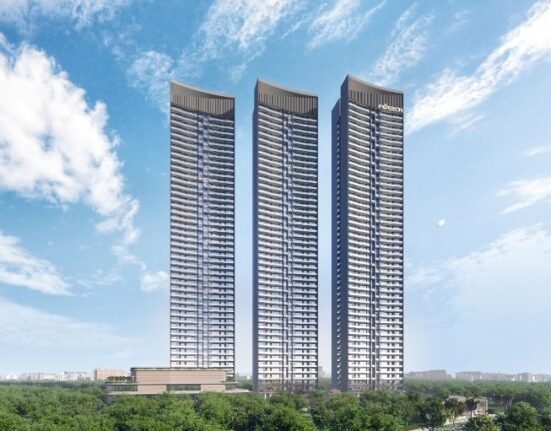
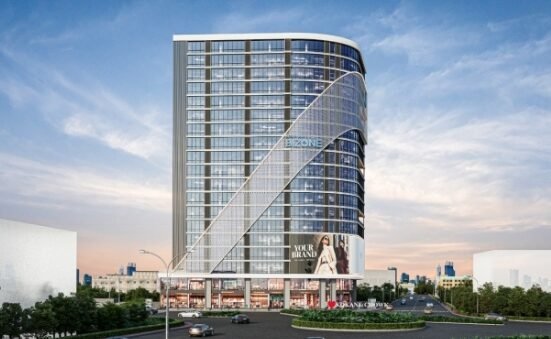
Every industrial expansion creates a downstream ripple, and in Panipat, that ripple is most visible in real estate. Industrial Corridors & SEZs have generated jobs, which create a direct impact on housing demand. Housing developments have largely focused on catering to middle-income groups, leading to a notable rise in gated communities, planned townships, and plotted developments. Likewise, commercial activity is also booming due to the need for offices, retail shops, and commercial centres.
The property location is strategic, offering access to economic opportunities in the national capital, along with the advantage of lower costs and less congestion. The large investments being made in terms of residences and mixed-use developments indicate growing confidence in the future path of development of the region.
The corridor provides much cheaper cost in terms of land and housing than other cities like Delhi or Gurgaon, attracting first-time buyers and investors at an early stage. With the nearing completion of infrastructure projects, there is a change in aspirations towards capital appreciation.The spillover effect from the NCR further accelerates this. As core markets grapple with land scarcity and escalating prices, demand is dispersing outward, and the Sonipat–Panipat corridor is well-positioned to absorb it.
The Future Outlook
What is emerging is not just incremental expansion, but a reconfiguration of the NCR’s urban footprint. The Sonipat–Panipat corridor reflects how infrastructure growth, industrial expansion, and policy support are shaping self-sustaining urban hubs beyond traditional city centres. In this evolving landscape, plotted developments are emerging as a preferred choice due to their flexibility, lower density, and long-term value potential.
Panipat’s evolution is not an isolated story. It is part of a broader shift toward distributed urban growth, where opportunity is no longer confined to a few high-density nodes but is spreading along well-connected corridors. The fundamentals are aligning, the momentum is building, and the Sonipat–Panipat stretch is poised to become one of NCR’s defining chapters.