Mumbai’s luxury housing market is increasingly becoming a structural growth engine, significantly outpacing the wider residential market. In H1 2026, transactions in homes priced above ₹10 crore rose 12% YoY to a record ₹18,512 crore, while transaction volumes rose 26% to 957 homes; Mumbai’s overall residential sales grew only 1% YoY to 47,355 units. This premiumisation is being shaped by a more globally exposed, conscious consumer who travels extensively, experiences international standards of hospitality, design and wellness, and increasingly expects those influences to translate into homes in India. MICL is contributing to this evolution through a ₹18,125+ crore development portfolio as on Jun-26, including an ₹8,000+ crore South Mumbai portfolio spanning Tardeo, Marine Lines and Bandra, alongside premium developments in BKC, Pali Hill and Vile Parle.
These numbers matter because the luxury market is increasingly being driven by structural wealth creation rather than a single cycle of speculative demand. Mumbai’s affluent buyer universe includes entrepreneurs, professionals, family business owners, investors and globally connected Indians. For many HNIs, a well-located residence competes for capital with other financial and alternative assets, so the purchase decision increasingly involves both emotional and financial considerations. The home has become part residence, part lifestyle asset and part expression of personal identity. Conspicuous consumption is therefore evolving: the premium is increasingly attached to scarcity, privacy, design, service and experiences that are difficult to replicate.
This has materially changed the way luxury homes are evaluated. Today’s buyers are far more informed, globally exposed and intentional in their choices than they were a decade ago. They are looking beyond the traditional markers of luxury and paying greater attention to design, wellness, service standards, privacy and long-term value. What this has created is a more discerning market where purchasing decisions are based on the overall quality of the offering rather than on a single attribute. From an industry perspective, this is a healthy shift because it encourages developers to focus on product excellence and execution. In Mumbai’s premium micro-markets, demand remains robust, but the developments that stand out are those that deliver a clear and differentiated living experience. Equally important, buyers today place significant value on execution credibility and timely delivery, recognising that the ability to consistently deliver projects as promised is a critical marker of trust, quality and long-term value creation.
The evolution of the luxury buyer is also changing residential design. Larger homes remain relevant, but additional square footage by itself is no longer sufficient. Buyers increasingly look for natural light, ventilation, private outdoor spaces, acoustic comfort, wellness, technology, security and high-quality common areas. In Mumbai, where land is scarce and time is a premium, residents want the building itself to contribute to the quality of their day. The most valuable amenities are consequently those that are used repeatedly, rather than those that exist only as visual statements.
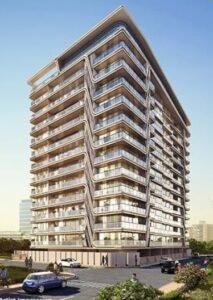
This is the philosophy we have tried to bring into MICL’s developments. Aaradhya Avaan in Tardeo is conceived around a highly experiential approach to luxury, while our projects across Vile Parle, Ghatkopar and other established micro-markets respond to evolving expectations across premium and aspirational segments. We are also moving towards a more differentiated ultra-luxury proposition through the MS Collection residences, where limited inventory and a distinct identity are intended to create a stronger sense of legacy. We describe this vertical as a focused ultra-luxury platform with limited inventory and individual project identities.
Location continues to be fundamental, but Mumbai’s definition of a good location is also widening. Infrastructure is redistributing accessibility across the region. The Mumbai Trans Harbour Link has strengthened connectivity towards Navi Mumbai, while the expanding metro network is changing how peripheral and established locations relate to employment centres and social infrastructure. For developers, this makes micro-market analysis more important than citywide assumptions. Demand, pricing and product-market fit can vary substantially within a few kilometres. The MTHL, for instance, was explicitly conceived to improve connectivity between Mumbai’s island city and Navi Mumbai and to support the region’s development. MMRDA
Redevelopment is central to this equation because Mumbai cannot rely on greenfield land to meet future demand. Knight Frank estimates that 1,094 societies are currently under redevelopment, collectively covering about 432 acres, with the pipeline capable of generating nearly 59,000 homes worth around ₹1.5 lakh crore by 2031. The scale of this opportunity is particularly relevant to Mumbai’s premium and luxury markets, where established locations command a disproportionate share of demand. In H1 2026, Mumbai’s ₹10 crore-plus residential segment recorded a record ₹18,512 crore in transactions, up 12% YoY, with 957 homes sold, up 26% YoY. This demonstrates the value that redevelopment can unlock in well-established, supply-constrained micro-markets. More importantly, redevelopment is creating an opportunity to renew established neighbourhoods without sacrificing their connectivity, social ecosystem and cultural character. For developers, however, feasibility discipline is critical. Land economics, FSI, construction costs, approval timelines and the expectations of existing societies must all work together for a project to remain viable.
This is where I believe the next phase of Mumbai real estate will become more disciplined. The market is strong, but developers cannot build their business plans around perpetual price appreciation. At MICL, we have historically evaluated projects on the basis that the underlying project economics should work without depending on future price escalation. Our current real estate portfolio has an estimated GDV of over ₹18,125+ crore, with a launch pipeline of around ₹6,600+ crore for FY27, spanning locations including Marine Lines, Tardeo, BKC and Pali Hill. Our Vision 2031 is to build this portfolio to over ₹35,000 crore through selective business development and strategic expansion. These figures were outlined by MICL management in its FY26 earnings call.
The opportunity for Mumbai is therefore much larger than luxury housing alone. Premiumisation is influencing broader residential expectations, while infrastructure and redevelopment are reshaping where and how the city can grow. For developers, capital allocation will matter as much as sales: the ability to recycle capital, maintain balance-sheet discipline and select projects with durable absorption will determine the quality of growth. At MICL, our integrated construction and development capabilities also give us greater visibility on execution, an important consideration in projects where customers are committing substantial capital several years before completion. MICL has emphasised disciplined execution, capital prudence and its integrated EPC and real estate model as part of its next phase of growth.
For HNIs, residential real estate also remains a tangible store of wealth. The preference, however, is becoming more selective. Buyers are increasingly asking whether a property has enduring scarcity, rental or resale depth, strong neighbourhood fundamentals and a credible development brand behind it. This is particularly relevant in South Mumbai and established western suburbs, where limited land and strong social infrastructure create barriers to replicating the location.
Luxury is increasingly becoming a question of relevance. A home may carry a premium because of its address, architecture or amenities, but its enduring value will come from how well it serves the life of the person who buys it. That is ultimately where the future of Mumbai’s luxury housing market lies.