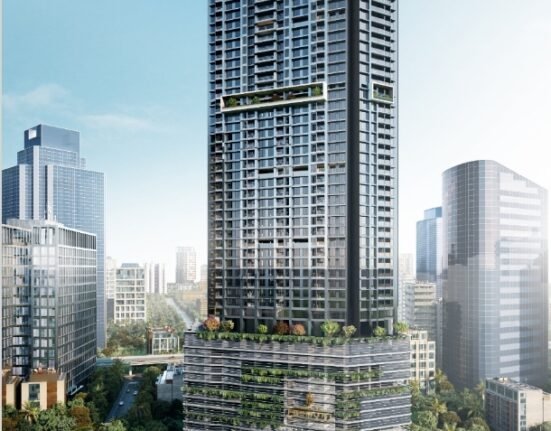

India’s urban landscape is represented by a skyline, rising defiantly to form an arresting image. It reflects India’s economic ambition. A vision that is layered, dense, complex and steadily ascending. In about two decades, the forces of urbanisation, infrastructure expansion and demographic change will have fundamentally reshaped India’s property markets. While the younger generation is increasingly gravitating towards megacities, these urban growth centres will determine not just real estate outcomes, but the broader trajectory of the country’s economic prowess.
India’s megacities are driven by employment opportunities, lifestyle aspirations and access to infrastructure, with urban agglomerates like Mumbai, Delhi-NCR, Bengaluru, Hyderabad and Pune witnessing sustained population inflows. This is not a short-term post-pandemic correction but a structural migration trend. India, currently about 35–38 per cent urbanised, is expected to approach 50 per cent urbanisation by 2040. There are projections that indicate that nearly 200 million people will move to cities over the coming years, supported by a demographic profile in which almost 65 per cent of the population is under 35.
As we enter 2026, the economy is already being reshaped by urban concentration. The megacities of India contribute more than 60 per cent of its GDP. Mumbai alone accounts for an estimated Rs 25.73 lakh crore. Of this, real estate, which contributes around 7–8 per cent to GDP, sits at the intersection of employment creation, capital investment and household wealth. This long-term trend of migration is set to significantly influence real estate. The sector’s demand, supply dynamics and pricing patterns across residential, commercial and mixed-use segments are being written around this migration.
Bengaluru and Pune are cities driven by employment and strong office absorption led by technology firms and global capability centres, which continue to reinforce the demand for housing. In Mumbai and Delhi-NCR, financial services, media, consulting and emerging digital sectors have contributed to sustained markets in premium and mid-income residential developments. Over time, we expect this concentration to move into demand for mixed-use developments that combine housing, offices, retail and social infrastructure within walkable, transit-connected zones.
The upside is a stronger end-user demand which is lending stability to residential markets, particularly in the mid-income and aspirational segments. This demand is no longer limited to ownership alone, with rental housing, managed living formats and workforce housing near employment corridors gradually becoming more relevant as cities expand outward and densify inward. Redevelopment opportunities are expanding rapidly in land-constrained cities, where ageing housing stock is being replaced with denser, safer and more efficient structures. Infrastructure-led value creation is especially seen around metro corridors, expressways and suburban rail upgrades. This is redefining different micro-markets and redistributing growth beyond traditional core zones.
Infrastructure remains the single most powerful catalyst in this transformation. Metro rail networks in Mumbai, Delhi-NCR and Bengaluru are altering commute patterns and unlocking new residential and commercial catchments. Transit-oriented development is enabling higher densities without proportionate increases in congestion. Over the next two decades, infrastructure investment will play a decisive role in determining which urban markets outperform and which don’t. Equally, climate-resilient infrastructure, flood mitigation, heat management and water security will increasingly influence long-term asset value, particularly in high-density coastal and land-constrained cities.
The challenges are however equally pronounced. Affordability pressures continue to weigh on buyers, particularly first-time homeowners, as land scarcity and construction costs push prices upward in core locations. Density management continues to be a delicate task, requiring careful planning to avoid infrastructure mismatch. If not addressed through timely infrastructure delivery and planning alignment, these pressures can lead to uneven growth and stress on urban systems.
In the long term, prices in well-connected, employment-rich urban locations will show steady appreciation. Short-term corrections may occur due to interest rate cycles or economic slowdowns, but the underlying demand from urbanisation and demographics will continue to provide a strong floor. Peripheral markets without adequate infrastructure will however require attention as cities grow, as poorly planned expansion poses greater long-term risk than compact, well-managed density.
In this largely complex environment, the role of having the right advice has become critical. As regulations deepen and redevelopment projects grow in scale, experienced real estate advisors act as intermediaries between developers, investors, policymakers and resident communities. Their work spans feasibility analysis, redevelopment structuring, regulatory alignment and risk management. Backed by data-driven insights and long-term perspectives, professional help ensures that urban growth remains financially viable, legally robust and socially sustainable, particularly when it involves large, multi-stakeholder redevelopment projects.
Technology is reinforcing these functions by improving market intelligence, transparency and valuation accuracy, enabling better decision-making for buyers and investors alike. Given that private equity and institutional capital will re-engage with the Indian real estate sector over the coming years, informed advisory inputs will be necessary in directing capital towards projects that create lasting urban value rather than short-lived gains.
Those critical of megacity-led growth often cite congestion, environmental stress and inequality as arguments. These concerns are valid, but they argue for smarter planning rather than resistance to urbanisation itself. Vertical development, green building standards and mixed-use zoning are viable methods of accommodating density while improving liveability. Compact, well-managed cities with resilient infrastructure are better positioned to absorb growth than dispersed, under-planned urban sprawl.
What this evolving landscape means for buyers, investors and policymakers over the next twenty years is simple. Buyers must prioritise connectivity, infrastructure and long-term liveability over short-term price considerations. Investors will have to align with demographic and employment trends rather than speculative cycles. Policymakers will need to continue liberalising zoning, accelerate infrastructure delivery and strengthen redevelopment frameworks.
India’s megacities are engines of productivity, innovation and opportunity. The real estate story unfolding within them is still at its infancy. But how effectively urban growth is planned, advised and executed today will determine whether we emerge as an inclusive economic powerhouse or become fragmented landscapes of missed potential. The time starting now will decide that outcome.