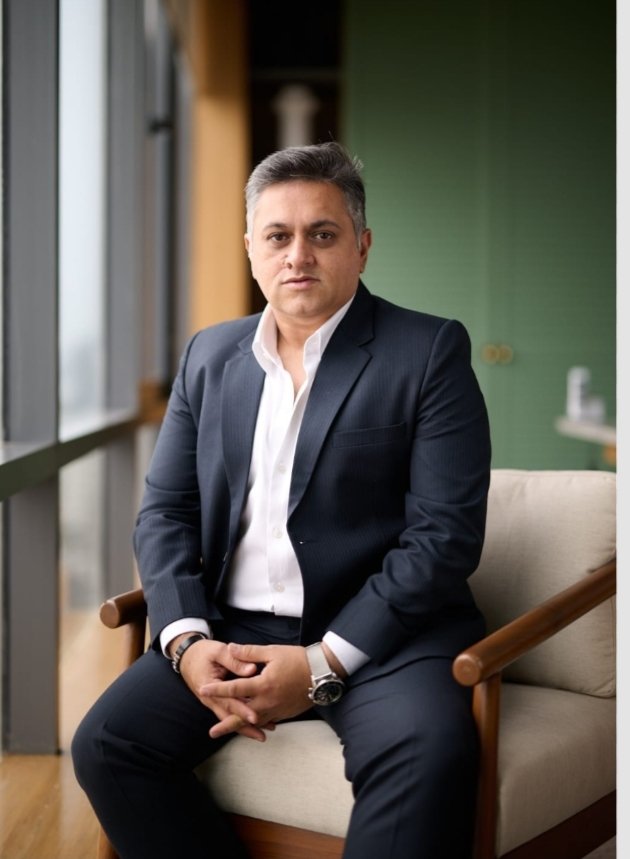
Why Senior Living Could Define India’s 2026 Real Estate Growth Story By Anil Godara, Founder and Managing Director, J Estates

India’s housing market is entering a more mature phase. The 2026 growth narrative is no longer only about more supply or higher sales, it is increasingly about new categories and emerging user needs that traditional residential formats are not built to address. One such category now moving from the margins to the mainstream is senior living housing, a segment shaped by demographic inevitability, evolving social structures, and a clear premiumization of how Indians want to age.
Demographic Shift and Structural Housing Demand Prospects
India’s senior population, defined as individuals aged 60 and above, is poised to more than double from 156.7 million in 2024 to 346 million by 2050. This transition will place India among the world’s largest ageing societies, turning longevity into one of the country’s most consequential socio-economic shifts. This transition creates a significant opportunity for the housing sector: a rapidly expanding demand base requiring purpose-built environments that prioritize quality of life, safety, and dignity. Senior living is not emerging because it is new—it is emerging because the scale of demand can no longer be ignored.
Integrated Ecosystems: A Service-Led Housing Model
Senior living is a specialised residential asset class designed to respond to life-stage transitions. It extends beyond premium housing to deliver environments purpose-built to reduce day-to-day uncertainty while enhancing safety, accessibility, and social connection. The model is structured to balance resident autonomy with an assured support framework, enabling meaningful community engagement without compromising privacy or independence.
Senior living spaces perform best as an integrated township ecosystem. The integrated ecosystem operates as a managed, service-led environment where quality infrastructure is seamlessly integrated with wellness routines, preventive healthcare access, and an active social fabric. Recognising that needs evolve over time, the framework of such ecosystems should be anchored in a “Continuum of Care” approach, spanning independent living for active seniors, assisted living for personalised daily support, and specialised memory care, so residents can age in place with dignity, continuity, and appropriate levels of assistance as requirements change.
Design and Functionality: Core Requirements for Senior Housing
Seniors seek a living environment that runs smoothly and predictably, reliable safety and emergency response, healthcare within easy reach, low-maintenance homes, and age-friendly design that supports safe mobility and reduces fall risk. Just as important are social connection without dependence, and the assurance that dignity, privacy, independence, and costs remain stable and transparent.
The ideal senior living models treat design as functional dignity: walkable layouts, step-free access, anti-skid surfaces, effective lighting and ventilation, clear wayfinding, built-in emergency response, and a consistent layer of human support that ensures the environment works in practice, not just on paper.
Market Penetration Remains Low Despite Growing Acceptance
The strongest validation for senior living as a 2026 growth theme is how underbuilt the segment remains. India’s senior living market penetration is still around 1.3 percent, a fraction of mature markets such as the United States and Australia where penetration exceeds 6 percent. This gap represents structural whitespace: a demand pool that has begun forming, but a supply ecosystem that is still catching up.
At the same time, the market has moved beyond proof-of-concept. India has already established more than 20,000 specialized senior living units, reflecting growing acceptance and developer confidence. Yet, relative to the size of India’s ageing population, the existing base remains early-stage. The category is not failing due to lack of need, but due to limited scale, uneven awareness, and constrained organized supply.
Evolving Household Structures Drive Category Adoption
A significant share of urban elderly live either alone, with only their spouse, or with people other than their children. Traditional multi-generational support structures are not as reliable as they once were, especially in urban India.
The trend is amplified by a rising number of single seniors, particularly women supported by higher life expectancy, children living away for work including large NRI-linked households, greater acceptance of independent living arrangements, and a growing preference for community-based ageing rather than isolation. As this mindset becomes mainstream, senior living shifts from alternative housing to a lifestyle and wellbeing choice.
2026 Outlook: Senior Living as a Strategic Growth Vertical
Senior living is increasingly aligned with the direction of India’s broader housing evolution: premiumization, wellness-led living, planned communities, and outcome-driven real estate. In 2026, this segment is likely to gain momentum because it sits at the intersection of three forces: demographic certainty where the demand curve is structural not cyclical, a maturing buyer base increasingly willing to pay for predictability and community, and a category gap leaving room for significant expansion in organized formats.
For developers and institutional stakeholders, senior living offers a long-horizon opportunity to build differentiated, service-linked residential ecosystems. For the housing sector, it represents the next shift in value creation: from building units to delivering quality of life outcomes. And for India’s real estate growth story in 2026, it may emerge as one of the most consequential category expansions, defining not just how India builds homes, but how India builds environments to age with dignity.