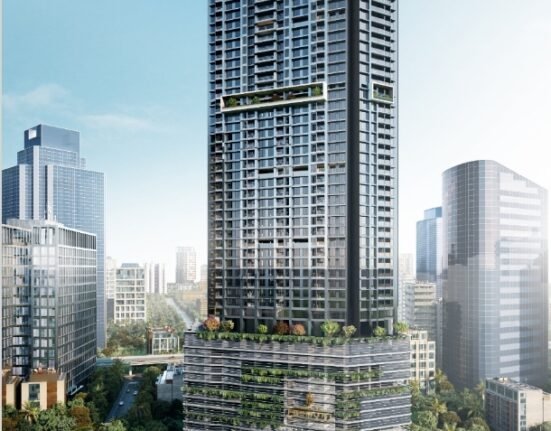

For years, Dwarka Expressway was a real estate story built on potential. The corridor connecting Delhi with Gurugram was defined by developing sectors, construction activity and expectations of infrastructure yet to come. That narrative is changing. With the expressway substantially operational, residential communities taking shape, and connectivity to Delhi, Gurugram and IGI Airport improving, Dwarka Expressway is emerging as a significant residential growth engine for the National Capital Region.
More significantly, the nature of the market itself is changing. Dwarka Expressway is moving beyond an investment-led proposition towards a mature residential ecosystem, supported by end-users, employment hubs, commercial activity and improving social infrastructure.
Infrastructure and Connectivity as the Catalyst
Connectivity has been the crucial factor shaping this transition. The signal-free 29-km corridor offers an alternative link between Delhi and Gurugram, easing dependence on NH 48 while improving access to the airport, Dwarka and New Gurugram. Its wider links to UER II, NH 48 and the Delhi-Mumbai Expressway extend the corridor’s regional catchment.
The impact runs deeper than shorter commutes. In the NCR, where housing demand tracks closely with access to employment, better mobility changes the geography of where people can realistically live. Dwarka Expressway connects residential sectors with major employment destinations, such as Cyber City, Udyog Vihar and Manesar, while its Delhi-side connectivity improves access to Yashobhoomi, the Blue and Orange Metro lines and the upcoming Bijwasan railway station.
Connectivity, in other words, is no longer an investment thesis. It has entered the residential mainstream.
https://www.pib.gov.in/PressReleasePage.aspx?PRID=2157088®=48&lang=2 )
Bigger Homes, Premium Buyers
The changing mix of housing is one of the clearest signs of the corridor’s growth. Of the 38,680 units launched between 2021 and H1 2026, 3-BHK homes accounted for 39%, 4-BHK and larger homes for 28%, 2-BHK homes for 27%, and 1-BHK units for just 6%.
This preference for larger homes points to a changing buyer profile: increasingly families and affluent buyers seeking space, privacy and better amenities.
(Source:https://websitemedia.anarock.com/media/Dwarka_Expressway_Micro_Market_Report_f0a36b2d33.pdf )
Buyers now weigh landscaped areas, wellness facilities and community amenities alongside the property itself, and Dwarka Expressway is well placed to meet these expectations with larger communities that are difficult to build in the more established, land-constrained parts of Gurugram.
Moving From Investment-Led to End-User Ecosystem
As the product has evolved, so has the nature of demand. Earlier buyers were purchasing into a future-growth story, betting on infrastructure completion and eventual price discovery. With projects nearing completion, end-users are now playing a greater role in shaping the market: buyers purchasing not just for appreciation but to live, work and build their daily lives here, which changes what the residential market must offer.
This shift is creating demand well beyond housing. A growing resident population needs schools, healthcare, grocery stores, restaurants and everyday retail, making commercial development more viable and strengthening the area’s appeal to future residents. The result is a self-reinforcing cycle: housing attracts residents, residents generate consumption, and a stronger local ecosystem deepens end-user demand.
The corridor’s next growth phase will depend on how effectively supporting infrastructure keeps pace with residential development. The proposed 4.2-km signal-free elevated corridor along the Southern Peripheral Road, linking Vatika Chowk with NH-48, could close a key connectivity gap by easing movement to Cyber City and Udyog Vihar. UER-II, proposed metro connectivity and wider commercial expansion could strengthen the corridor’s position within NCR further.
https://www.epcworld.in/dwarka-expressway-gurugrams-emerging-residential-growth-corridor/ )
Toward a Mixed-Use Urban Destination
Commercial development is beginning to grow alongside housing, with shop-cum-office developments, high-street retail and mixed-use projects emerging across the corridor and adjoining sectors. Proximity to Gurugram’s corporate zones supports leasing potential, while improving accessibility is encouraging developers to pursue premium, lifestyle-oriented and sustainable projects.
This emerging commercial layer could gradually reduce residents’ dependence on established parts of Gurugram for work, retail and entertainment, blurring the traditional distinction between a residential suburb and a standalone urban district.
Social infrastructure will matter just as much. Schools, hospitals, hospitality and recreational facilities are expanding across sectors 102-113, capturing the newer pockets. For an increasingly end-user-driven market, what exists today is becoming as important as what is promised tomorrow.
(Sources:
https://websitemedia.anarock.com/media/Dwarka_Expressway_Micro_Market_Report_f0a36b2d33.pdf,
https://www.epcworld.in/dwarka-expressway-gurugrams-emerging-residential-growth-corridor/ )
An Axis in the Making
Dwarka Expressway’s transformation follows a familiar pattern of metropolitan expansion: infrastructure creates accessibility, accessibility attracts housing, housing creates population, and population generates demand for employment, commerce and social infrastructure.
The corridor has moved well beyond the first stage of that cycle. The rise in residential prices, growing demand for larger homes, rising premiumisation and expanding commercial and social infrastructure all point to a market becoming increasingly integrated.
Its future growth will depend not simply on further housing construction but on the maturation of the ecosystem around it. Public transport, last-mile connectivity, employment hubs, retail, healthcare and civic infrastructure will need to develop alongside residential density.
If that balance is achieved, Dwarka Expressway could evolve from a peripheral residential corridor into one of NCR’s more established urban axes, connecting Delhi and Gurugram while supporting the homes, workplaces, services and lifestyle infrastructure of a growing population.