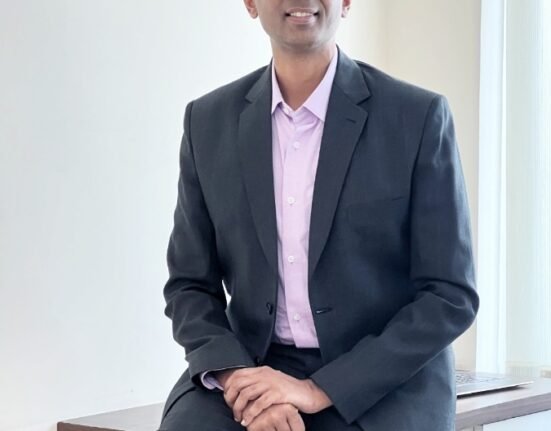
From an industrial township to an increasingly self-sustaining urban centre, Pimpri-Chinchwad’s transformation is redefining where and how Pune’s next generation chooses to live. Satish Agarwal and Narendra Agarwal discuss how infrastructure, employment corridors, premiumisation and changing homebuyer aspirations are shaping PCMC’s residential market, and Aishwaryam Group’s role in this evolution.
How has infrastructure development transformed PCMC’s residential landscape over the last two decades?
Satish Agarwal: PCMC’s transformation has been remarkable. Two decades ago, residential demand was largely driven by industrial employment, affordability and proximity to workplaces. Today, PCMC has evolved into a much more diversified urban economy, supported by manufacturing, IT, education, healthcare, commercial establishments and an expanding retail ecosystem.
Connectivity has been central to this transition. The Pune Metro’s operational corridors, improvements to major road networks and access to the Mumbai–Pune Expressway have strengthened regional mobility. The Hinjawadi–Shivajinagar Metro corridor, once operational, is expected to further improve connectivity to a major employment hub.
The impact goes beyond reduced commuting time. Infrastructure creates confidence in a location’s long-term potential, attracts businesses, encourages social infrastructure and gradually changes how people perceive a neighbourhood.
Locations such as Wakad, Tathawade, Punawale, Ravet, Moshi and Chikhali are increasingly being evaluated as residential destinations in their own right, rather than simply affordable alternatives to central Pune.
Which infrastructure and economic developments are likely to influenc the next phase of residential demand in PCMC?
Narendra Agarwal: The most significant opportunity lies in the convergence of transport infrastructure, employment generation and commercial development.
The Hinjawadi IT corridor, Chakan–Talegaon industrial belt and established manufacturing ecosystem continue to generate employment-led housing demand. At the same time, road connectivity, proposed and ongoing transport improvements, educational institutions, healthcare facilities and organised retail are strengthening the residential appeal of surrounding micro-markets.
However, infrastructure does not benefit every location equally or immediately. Accessibility, last-mile connectivity, project execution and the availability of social infrastructure remain important considerations.
We are also witnessing the emergence of more integrated neighbourhoods where residents want access to workplaces, shopping, recreation, schools and healthcare within a reasonable distance.
This is changing the geography of residential demand. Homebuyers are increasingly looking at the overall ecosystem rather than evaluating a project in isolation.
How is this transformation changing the profile and expectations of PCMC’s homebuyers?
Satish Agarwal: The biggest change is the transition from value-conscious buying to aspiration-led decision-making.
Earlier, the primary considerations were price, apartment size and proximity to employment. While these remain important, today’s buyers are equally focused on design, amenities, open spaces, wellness, security, community living and the overall quality of their residential environment.
The changing dynamics are also reflected in PCMC’s residential micro-markets. According to Knight Frank India’s H2 2025 residential market report, housing prices in Wakad ranged between approximately ₹10,047 and ₹13,185 per sq. ft., recording 6% annual growth. Moshi recorded prices of ₹6,639–₹6,859 per sq. ft., while Chikhali stood at ₹6,316–₹6,543 per sq. ft., with annual increases of 2% and 1%, respectively. These variations demonstrate how PCMC’s residential market is evolving across different price points, with established and emerging locations offering distinct propositions to homebuyers.
For developers, this means moving beyond simply delivering apartments to creating thoughtfully planned communities. Premium living is not necessarily about an expensive address; it is about the quality of everyday life, the experience of the development and the long-term value it creates.
How has Aishwaryam contributed to PCMC’s evolution, particularly its transition towards premium and branded residences?
Narendra Agarwal: Aishwaryam’s journey has closely mirrored PCMC’s development over nearly two decades. We began by understanding the needs of a largely value-driven residential market and progressively evolved our offerings as the region’s infrastructure, economy and homebuyer aspirations changed.
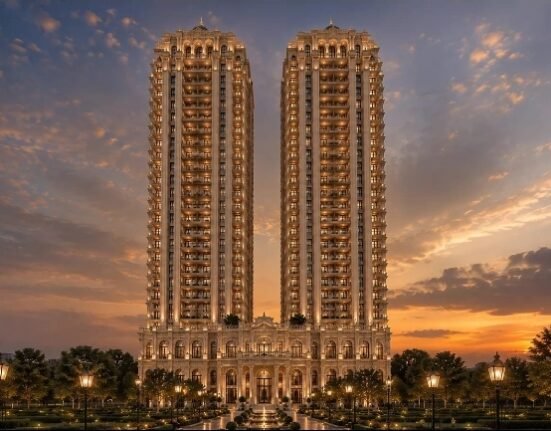
One of our important strategic decisions was introducing internationally associated branded residential experiences through our collaboration with FashionTV.
Our F portfolio, including F Premium and F Signature, was conceived around the belief that PCMC’s homebuyers should have access to design-led, aspirational residential experiences without necessarily moving to traditional luxury neighbourhoods.
For us, this was not simply about associating a project with an international brand. It was about recognising that buyers increasingly value architecture, lifestyle amenities, aesthetics, thoughtfully designed common spaces and a distinctive residential environment.
The FashionTV association has helped us introduce a differentiated proposition to PCMC and contribute to the wider conversation around premium living in emerging urban markets.
As developers, we believe our responsibility is not merely to respond to existing demand but to anticipate how expectations will evolve and create developments that help raise the standard of residential living.
Aishwaryam has achieved significant scale over nearly two decades. How does this strengthen its positioning for the next phase of growth?
Satish Agarwal: Our journey has been built on a deep understanding of PCMC, consistent development activity and the relationships we have established with homebuyers and stakeholders.
Today, Aishwaryam Group’s development legacy includes:
- 60+ projects
- 10,000+ families
- 5 million+ sq. ft. of development
- 400+ commercial units sold
- Nearly two decades of real estate experience
These milestones reflect our evolution from a regional residential developer into a diversified real estate organisation with interests spanning residential, commercial, plotted development, education and infrastructure.
Our presence across Moshi, Chikhali, Tathawade, Punawale, Wakad, Nigdi and Akurdi has provided us with valuable insight into how different micro-markets evolve.
We are now building on this foundation through premium residential developments, differentiated lifestyle offerings, strategic associations and expansion into locations such as Ravet, Balewadi, Kharadi, Gahunje, Kasarwadi and Parandwadi.
Our aspiration is to be recognised as one of the top real estate groups in the city, distinguished by trust, innovation, quality and the value we create for all stakeholders.
Scale is important, but what matters equally is the ability to translate experience into better developments, stronger customer relationships and sustainable growth.
Looking ahead, how do you see PCMC’s residential market evolving over the next decade, and what role will Aishwaryam play?
Satish Agarwal: I believe the next decade will be defined by the emergence of more self-sustaining urban neighbourhoods, where residential, commercial and social infrastructure evolve together.
PCMC’s established employment base, improving connectivity and expanding lifestyle ecosystem provide a strong foundation. However, the next phase of growth will depend on infrastructure execution, responsible urban planning, quality development and the ability to meet increasingly sophisticated consumer expectations.
The opportunity is not simply to build more homes, but to create better neighbourhoods and communities.
Narendra Agarwal: From a development perspective, we expect greater emphasis on design, wellness, community spaces, integrated amenities, sustainability and differentiated residential experiences.
Branded and premium residences will become increasingly relevant as buyers look beyond conventional definitions of luxury. However, brand associations must be supported by genuine product differentiation, construction quality and long-term customer value.
At Aishwaryam, our philosophy of “Prosperity Begins Here” guides this approach. As PCMC grows, we want to contribute through developments that reflect evolving aspirations while remaining rooted in thoughtful planning and customer trust.
Ultimately, the next phase of PCMC’s growth will not be measured only by the infrastructure it builds or the number of homes it adds, but by the quality of life it creates. That is where we see Aishwaryam playing a meaningful role.