
Mumbai is setting the pace for luxury living in India. Buyers are choosing larger, better-designed homes in the city’s prime addresses, and a skyline that once seemed fully built is rising to meet them, bringing fresh energy to neighbourhoods across the market. According to the Mumbai Luxury Housing Report H1 CY’26, released jointly by India Sotheby’s International Realty and CRE Matrix, homes priced at ₹10 cr. and above drew ₹18,512 cr. in sales in the first half of 2026, up 12 per cent year-on-year. Transactions rose even faster: 957 deals, a 26 per cent jump over the same period in 2025.
The story is not confined to the very top of the market: homes priced between ₹20 cr. and ₹40 cr. have become a pivotal segment, growing from 66 units sold in the first half of 2023 to 156 in the first half of 2026. Buyers are also prioritising space, with homes measuring 2,000 to 4,000 sq. ft accounting for 58 per cent of primary-market luxury sales. Location still anchors the market. Worli led all micro-markets, while Tardeo, Lower Parel and Bandra West continue to draw affluent buyers because of their proximity to business districts and well-established social infrastructure.
As these numbers indicate, buyers are willing to invest significantly in homes that deliver on location, space and quality. Developers who understand these priorities are helping the market remain resilient through changing conditions. As Mumbai grows denser, developers are responding with new residential formats, renewed neighbourhoods and projects that bring multiple aspects of urban life together.
A Skyline Built Upward
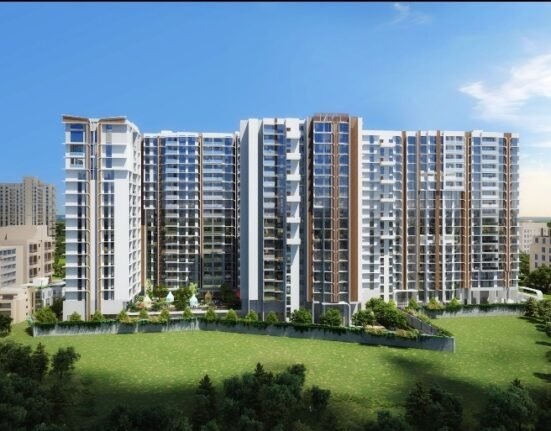
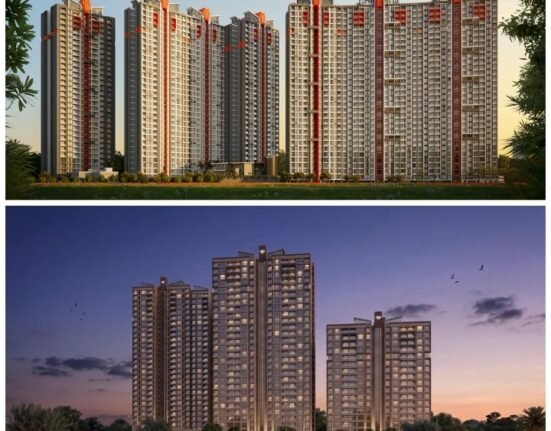
In a city where land is a scarce resource, growth has to go vertical. High-rise projects bring residences, landscaped spaces, recreation and shared facilities together in a single development, making efficient use of land while incorporating key elements of urban living.
The shift is changing established neighbourhoods for the better. New buildings bring contemporary housing formats, upgraded building services and amenities to areas with long residential histories. As older structures give way, Mumbai’s housing stock is steadily renewed, widening the choice for buyers at every stage of life. The JLL-NAREDCO report Redevelopment in Mumbai: The Inflection Point, published in September 2026, found that more than 1,000 redevelopment projects had launched in the city since 2020, accounting for roughly 13 per cent of overall residential supply. Borivali, Malad, Andheri, Vikhroli and Goregaon together accounted for 36 per cent of those launches, underlining the scale of this transformation across established and suburban neighbourhoods.
Dadar is an example of how this momentum is extending to established heritage neighbourhoods. Housing.com recorded a 7.99 per cent year-on-year rise in property prices in the locality, while 11 new residential projects were listed as recent launches by Mumbai Property Exchange in October 2026. This activity points to renewed buyer and developer interest in an established residential district, where redevelopment is creating opportunities for contemporary housing within its existing urban fabric.
Beyond individual projects, new developments can benefit the wider neighbourhood through improved residential infrastructure, landscaped spaces and better access to retail, healthcare and transport. Increasingly, this wider view of urban living is also influencing how projects are planned, with mixed-use developments emerging as an important part of Mumbai’s real estate landscape.
A More Integrated Urban Experience
As buyers place greater emphasis on convenience and quality of life, mixed-use developments are gaining relevance. By bringing residential spaces together with retail, offices, hospitality or other complementary uses, these projects can create more integrated environments in which several everyday needs are met within the same development or its immediate surroundings. For residents, this format can offer convenient access to services and amenities while reducing the need to travel for routine activities. For neighbourhoods, well-planned mixed-use projects can support commercial activity, increase footfall in retail spaces and create a more active urban environment throughout the day.
In neighbourhoods like Dadar, an established residential catchment with seamless connectivity across Mumbai, developments that combine housing with commercial and lifestyle offerings are of particular interest – as the location attracts renewed real estate attention, mixed-use projects present an opportunity to build on its existing urban character while responding to changing expectations around convenience and accessibility.
The appeal of this format also reflects a wider shift in how developers approach urban land. In a city where residential, commercial and retail demand often converge within the same neighbourhood, integrating complementary uses can create a more cohesive development proposition.
Renewal With Real Momentum
Redevelopment is the engine behind much of this change. It replaces ageing buildings with modern homes in neighbourhoods where vacant land has all but disappeared. Existing residents gain better-designed homes and upgraded facilities without leaving the communities they know. New buyers gain access to modern residences in proven locations, close to schools, hospitals, retail and workplaces. For luxury housing, the connection is especially powerful. Redevelopment lets established neighbourhoods offer larger layouts, contemporary architecture, upgraded services and lifestyle amenities that older buildings rarely had, extending the benefits of modern development well beyond new-build districts. Alongside this, mixed-use projects are bringing residential, commercial and lifestyle functions into closer proximity.
For developers, working with existing residents, honouring rehabilitation commitments and securing approvals must all be balanced against the design and delivery of new homes. Done well, redevelopment does more than replace a building. It renews the residential experience of an entire locality and helps Mumbai make better use of the land it already has. Today, premium housing is no longer tied to a handful of addresses. It is spreading across Mumbai’s suburbs, giving buyers more choice in space, connectivity, amenities and price. As residential infrastructure and social facilities mature in these areas, luxury living is taking different forms across the metropolitan region, shaped by local character and buyer needs.
The Next Generation of Homes
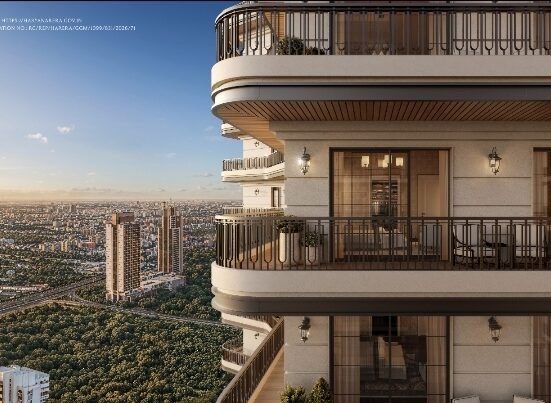
As expectations rise, so does the sophistication of premium housing. Developers are paying closer attention to how architecture, interior layouts, amenities and building performance work together, aiming for homes that are as functional as they are beautiful. In a space-constrained city, thoughtful planning pays off. Efficient layouts, well-considered circulation, landscaped areas and carefully integrated amenities make the most of every square metre, while advances in building systems support comfort, security and efficient resource use. That said, high-rise projects carry complex structural and operational demands, and premium specifications require consistency in materials, workmanship and finishing. Developers who pair sound planning with a clear understanding of buyers’ expectations create homes that hold their appeal long after possession.
Luxury housing will play a significant role in Mumbai’s residential future. Buyers want space, functionality, amenities and long-term value, and that demand is pushing developers to raise the standard of planning and execution. Redevelopment is modernising established neighbourhoods, while new projects broaden the range of premium homes across the city. Several trends will shape the next phase: wellness-oriented amenities, flexible layouts, energy-efficient systems and professionally managed common facilities. Connectivity will remain a deciding factor, and the quality of surrounding infrastructure will influence the appeal of both established and emerging locations.
Mumbai’s next generation of developments will be shaped by the relationship between location, design, construction quality and the way people use urban spaces. As the city continues to evolve, both premium residential projects and thoughtfully planned mixed-use developments will have an important part to play in shaping a more connected, liveable and contemporary metropolis.