India’s Fire Safety Code Just Got a Major Overhaul — Here’s What Changed By Mr. Manish Kumar , Senior Consultant — Fire & Process Safety ,AECOM India

India’s fire and life safety regulatory framework has taken a significant step forward with the release of the National Building Construction Standards 2026 Part F — Fire and Life Safety. The most immediate signal of this shift is the name itself. The familiar National Building Code (NBC) has been rebranded as NBCS — National Building Construction Standards — reflecting a broader intent to align the document with modern construction realities rather than treat it as a static policy guideline. For fire safety professionals, architects, and building owners, this revision carries several substantive changes worth understanding in detail.
The End of Building Height Restrictions
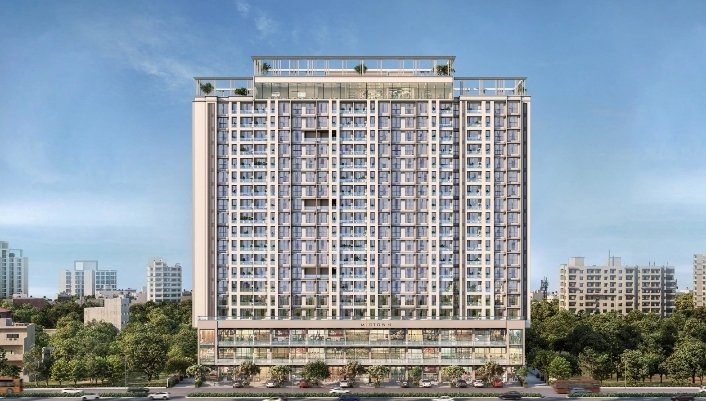
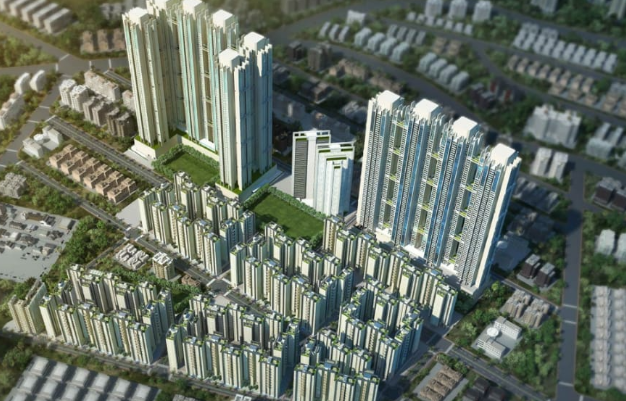
Perhaps the single most impactful structural change in NBCS 2026 is the elimination of height-based restrictions on buildings. The earlier NBC 2016 Part 4 contained a Table 2 that linked permissible building heights and floor areas to occupancy type and construction type — a prescriptive ceiling that municipal corporations could modify but not fundamentally bypass. NBCS 2026 removes this table altogether, decoupling building height limits from the fire code. This does not mean fire safety requirements vanish for taller buildings — they intensify, particularly through Annex D provisions for high rises — but the code no longer acts as a hard cap on ambition. Developers and planners now have more vertical latitude, provided fire protection measures scale accordingly.
Table 7 Reengineered for Each Occupancy
One of the most practically significant changes for fire protection engineers is the comprehensive restructuring of the firefighting installation requirements table. In NBC 2016, Table 7 was a single consolidated matrix covering all occupancies. NBCS 2026 breaks this into individual tables — 7A through 7J — each dedicated to a specific occupancy group: residential, educational, institutional, assembly, business, mercantile, industrial, storage, hazardous, and mixed use.
This granularity is long overdue. A data center has fundamentally different fire risk from a hospital ward, yet both were previously accommodated within a single table. The new structure allows for precise, occupancy-aligned requirements. Data centers, for instance, now have explicit protection level classifications up to CL6 within Table 7E, with specific rules for hyperscale and colocation facilities.
Two entirely new sub-tables — 7K and 7M — establish the basis for calculating water quantities for combined sprinkler-and-hose systems and hose-only protection systems respectively. This provides a rational, system-integrated approach to fire water demand that was previously left to interpretation or engineering judgment.
No More Loopholes in Compartmentation
Compartmentation requirements have been substantially strengthened in NBCS 2026. The earlier code addressed compartmentation broadly; the new version dedicates comprehensive provisions under Clause 4.5 that define fire barriers, compartment types, and exemptions with greater specificity. Notably, the water curtain requirement for basement compartmentation — a provision that was technically complex and often impractical to implement — has been reviewed and deleted. Its removal signals a shift towards more enforceable, buildable solutions.
Travel Distances and Occupant Load: Clarified
Updated travel distance values in Table 4 bring the code closer to global practices. The occupant load factor table (Table 2) now explicitly distinguishes between net and gross floor area calculations depending on occupancy type — a clarification that eliminates longstanding ambiguity in egress design. High-ceiling spaces such as airports and exhibition halls with ceiling heights of 10 m or more and sprinkler protection can now have travel distances increased by up to 100 percent, a provision that acknowledges the real fire dynamics of large open volumes.
Performance Based Design: Finally in the Code
One of the genuinely exciting additions in NBCS 2026 is Annex M, which officially brings Performance Based Design into an Indian building standard for the first time. Until now, fire safety compliance in India was strictly prescriptive — you either met the rule or you didn’t. Annex M opens a door for heritage buildings that physically cannot add a new staircase or refuge area without damaging their historical character. Instead of following fixed rules, engineers can now use fire modelling software to prove the building is safe. The model has to show that smoke stays clear enough to see through (5 to 10 metres visibility), heat stays survivable (below 60°C convective, below 2.5 kW/m² radiant), and that occupants are not exposed to enough toxic gas to incapacitate them — measured through Fractional effective dose (will the smoke kill you?) and Fractional effective concentration (will the smoke stop you from escaping?) — before everyone gets out. It is a smarter, more engineering-driven way of thinking about fire safety.
Annex N: Industry-Specific Fire Protection
Annex N introduces suggested fire protection requirements for specific industries as an informative guide, supplementing Table 7G. This covers a wide range of factory types across low, moderate, and high hazard categories, with specific recommendations for extinguisher type, hose reels, wet risers, sprinklers, and water storage. Combined with new Clause 5.4 provisions that tie fire detection and suppression system selection to the type and intensity of industrial hazards, the code now speaks far more directly to the industrial sector than its predecessor.
NBC 2016 handled industrial buildings through a single general table — Table 7 — that lumped all occupancies together with basic area thresholds of 100 m², 500 m², and 1,000 m². There was no dedicated guidance for specific types of industries. A textile factory, a chemical plant, and a food processing unit all fell into the same broad low, moderate, or high hazard buckets with little distinction between them.
NBCS 2026 changes this by introducing Annex N as a dedicated, industry-specific guide supplementing Table 7G. It covers factories across four hazard levels — Low, Ordinary, High Hazard A, and High Hazard B — with separate detailed appendices for larger facilities above 2,500 m² built-up area.
What It Means in Practice
NBCS 2026 Part F is a materially stronger, more differentiated document than NBC 2016 Part 4. It rewards engineering rigor — through PBD pathways and detailed occupancy tables — while closing loopholes that existed in the older consolidated approach. Fire safety professionals reviewing buildings against this code will need to work with the new occupancy-specific tables, reassess compartmentation strategies, and take advantage of the clarified egress calculations. The code’s non-binding nature remains, but its technical depth makes a compelling case for adoption.