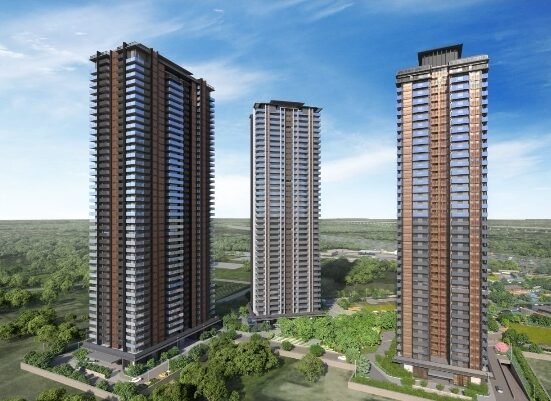

If there is one defining principle that has shaped Mumbai’s real estate growth story, it has to be this: infrastructure creates value. Over the last several decades, every major growth corridor across the city, from the western suburbs to the Bandra-Kurla Complex (BKC), has demonstrated that once connectivity improves, residential and commercial development has often followed. Today, as Mumbai enters a phase of large-scale infrastructure expansion, Oshiwara reflects the changing dynamics of the city’s emerging micro-markets.
Strategically located between Andheri, Goregaon, Lokhandwala and Versova, the Oshiwara district has long enjoyed a central position within Mumbai’s western suburbs. Yet, it had remained overshadowed by its more established neighbours. That equation has now changed, with a combination of infrastructure projects providing a strong impetus to the local real estate market. Metro connectivity, planned commercial development, road infrastructure, and widespread redevelopment have steadily transformed the locality. Oshiwara has begun to realise the benefits of being a well-connected residential locality in a high-potential urban zone.
This transformation also reflects a broader evolution in homebuyer preferences, with buyers prioritising ease of commute, integrated neighbourhoods and long-term liveability over legacy pin codes. In a city where daily travel often defines quality of life, locations that significantly reduce commuting time are becoming the preferred choice for both homeowners and investors. Infrastructure has emerged as one of the strongest catalysts driving Oshiwara’s transformation, turning it into a complete urban ecosystem.
The operational Metro Line 2A has significantly improved accessibility across Mumbai’s western corridor, connecting residents seamlessly to Andheri, DN Nagar, Goregaon, Malad, Kandivali and Dahisar. Metro connectivity has significantly shortened travel times and improved mobility across the suburbs. It has also expanded employment catchments and strengthened Oshiwara’s appeal for professionals working across multiple commercial hubs.
Road connectivity further reinforces this advantage. Oshiwara enjoys direct access to the Western Express Highway, Link Road and S.V. Road, placing it within comfortable reach of Mumbai’s airports, business districts and key social infrastructure. As mobility improves, the practical distance between residential neighbourhoods and employment centres continues to shrink, making centrally located micro-markets increasingly more desirable.
The next phase of property value creation is likely to be influenced by infrastructure projects that are still under development. Among them, the Versova-Bandra Sea Link has the potential to redefine commuting patterns across Mumbai’s western coastline by substantially reducing travel time to Bandra and eventually improving access to BKC, one of the country’s most important commercial districts. Historically, major transport infrastructure has had a multiplier effect on surrounding real estate by improving accessibility, expanding buyer catchments and attracting fresh investment. Oshiwara is well positioned to benefit from this long-term shift.
Equally significant is the development of the Oshiwara District Centre (ODC). Envisioned by the Mumbai Metropolitan Region Development Authority (MMRDA) as a mixed-use urban precinct, it combines commercial offices, retail, public infrastructure and civic amenities. The significance of such planned business districts lies in their ability to create a mature urban ecosystem where commercial activity, residential communities and supporting infrastructure evolve in tandem.
The expansion of commercial activity has already established Oshiwara as a well-balanced urban ecosystem where workplaces, housing and lifestyle infrastructure complement one another. Redevelopment has further reinforced this transformation by replacing ageing buildings with modern residential communities while simultaneously upgrading civic infrastructure and public spaces. In a land-constrained city like Mumbai, this not only creates much-needed housing supply but also enhances the overall quality of the neighbourhood, laying the foundation for sustained long-term value creation. Oshiwara has benefitted from wider internal roads, better-designed residential complexes, improved utilities and upgraded public spaces.
The strength of Oshiwara’s social infrastructure is equally important. Established schools, healthcare facilities, shopping destinations, entertainment hubs and hospitality offerings have transformed the area into a self-sustained urban neighbourhood. Residents enjoy greater convenience and an improved quality of life, with Oshiwara increasingly aligning with the evolving expectations of modern homebuyers.
The homebuyer today is no longer evaluating projects solely on apartment specifications, but is also assessing neighbourhoods through the lens of quality, commuting efficiency, social infrastructure and long-term growth potential. Micro-markets capable of delivering this broader urban experience are increasingly outperforming conventional locations. While a location may possess strong legacy value, limited scope for future transformation can restrict its long-term appeal.
Infrastructure-led value creation has consistently proved more sustainable than speculative growth. From an investment perspective, connectivity projects create enduring economic value because they improve productivity, reduce travel time and expand access to employment. When combined with planned commercial development and redevelopment-driven urban renewal, they establish the foundation for long-term demand rather than temporary market cycles.
Oshiwara illustrates this convergence particularly well. Operational metro connectivity, future transport infrastructure, planned commercial expansion and continuous redevelopment are collectively reinforcing one another. Together, these structural drivers are reshaping Oshiwara’s growth trajectory. Rather than relying on a single catalyst, the district’s transformation is being driven by multiple structural factors that support both residential and commercial demand.
The real estate growth of Mumbai is unlikely to be defined solely by the emergence of entirely new suburbs in the future. Instead, well-connected urban precincts that leverage infrastructure to unlock latent potential within established locations will lead the way. Oshiwara reflects this evolution in urban planning, where connectivity, redevelopment and integrated infrastructure together support economic activity. Redevelopment has enhanced urban living quality, and integrated planning has created neighbourhoods that are both more liveable and more resilient.
As Mumbai continues investing in its urban transport network and infrastructure, the city’s next wave of real estate growth is likely to be led by micro-markets that are successful today. Ultimately, Oshiwara’s greatest strength lies not in any single infrastructure project, but in the way connectivity, commercial activity, housing and lifestyle come together to create a complete and enduring urban ecosystem.